The Fundraising
Library.
Make the next fundraising decision with a clearer picture. Practical guides, worked examples and tools you can put to use.
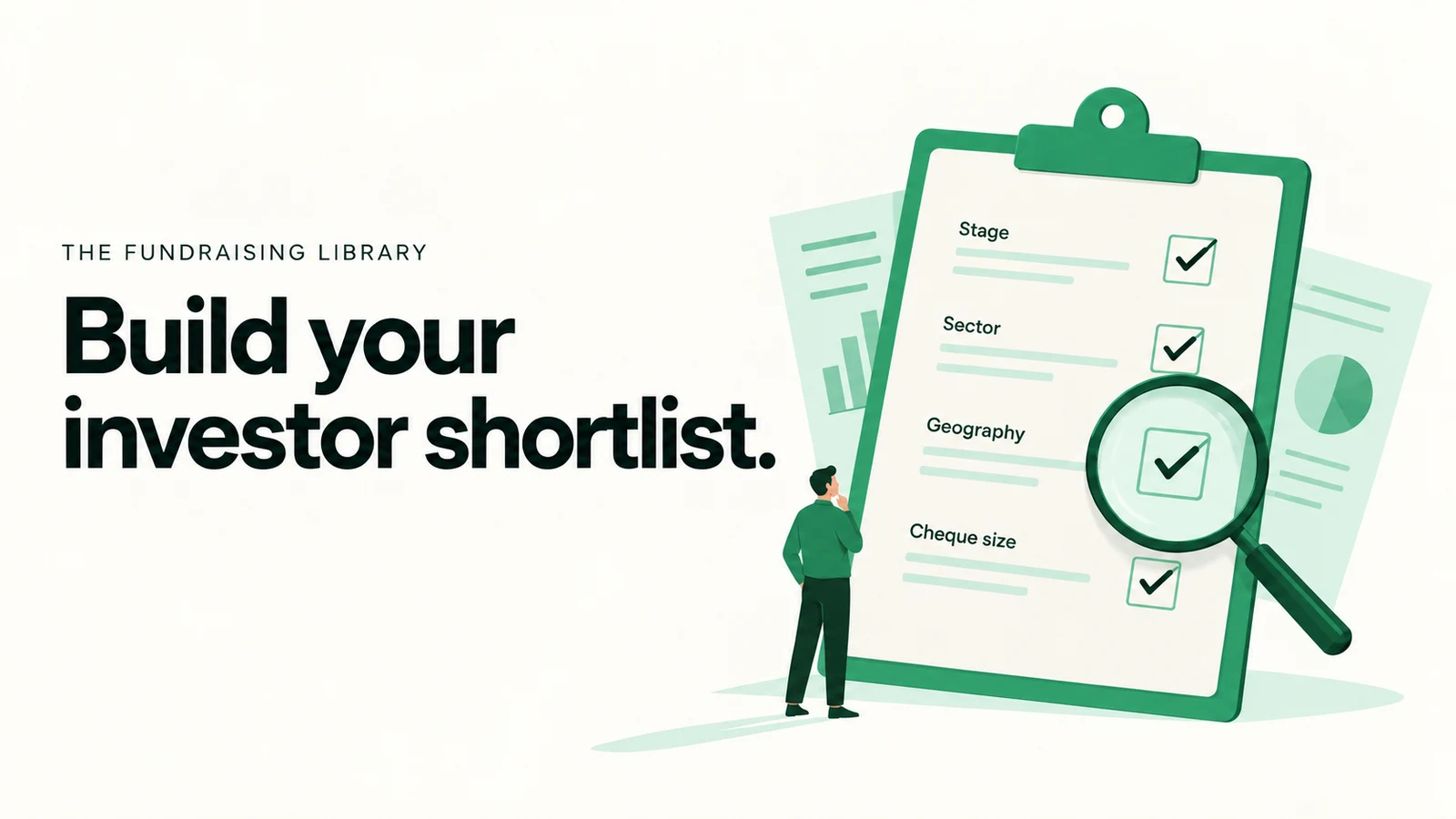
How to build an investor shortlist for your startup
Turn a list of names into a set of investors you can explain, qualify and approach. Includes a worked example and a downloadable checklist.
Read the guide →
 Investor updates · Guide 02
Monthly investor update template
Copy a reusable template, read a fictional example and prepare your own draft with RadarLab.
Get the template →
 Ownership and dilution · Guide 03
How to calculate founder dilution
Work through a priced round, compare option-pool assumptions and try your own numbers with CapLab.
Work through the example →
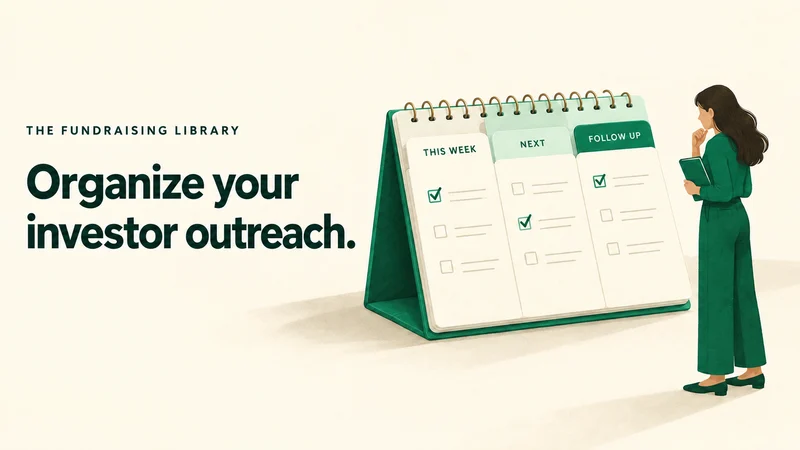 Running a raise · Guide 04
How to organize investor outreach and follow-ups
Keep stages, evidence and next actions clear. Includes a tracker, fictional examples and a FundLab walkthrough.
Read the guide →
 Pitch preparation · Guide 05
What to include in a seed pitch deck
Plan the slides, check the evidence and review a fictional example. Includes a worksheet and PitchLab walkthrough.
Read the guide →
 Fundraising preparation · Guide 06
Startup fundraising data room checklist
Prepare staged document packets, track missing records and check sharing decisions. Includes a register and DDLab walkthrough.
Read the guide →
 Cash planning · Guide 07
How to calculate startup cash runway
Calculate the simple ratio, compare changing cash patterns and download a monthly worksheet. Includes fictional model examples.
Read the guide →
 Financial planning · Guide 08
What your financial model should include before a seed round
Review the drivers, statement links and scenarios. Includes a worked example, assumption register and current ModelLab walkthrough.
Read the guide →
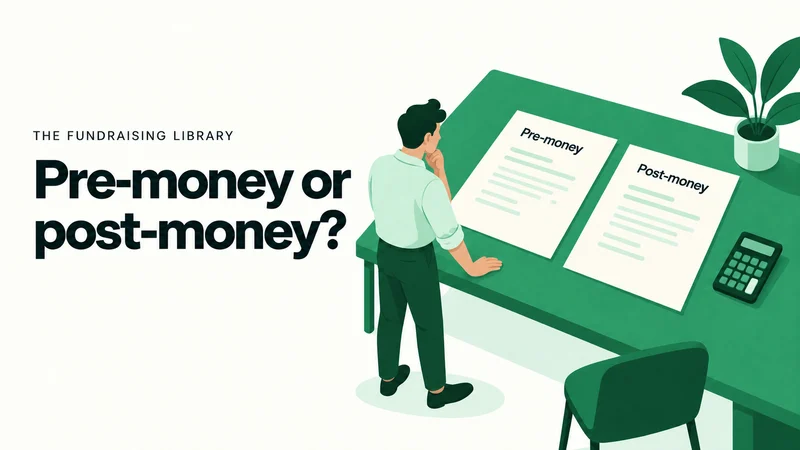 Valuation and ownership · Guide 09
Pre-money vs post-money valuation: a worked example
Translate the headline, check the share price and compare ownership. Includes worked quotes, a worksheet and CapLab.
Read the guide →
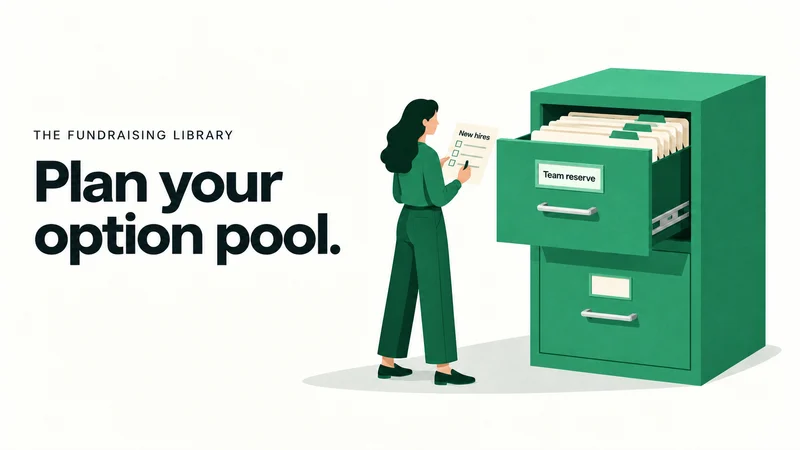 Ownership and team equity · Guide 10
How an employee option pool changes founder dilution
Compare pool timing, translate the denominator and separate grants from top-ups. Includes worked cases and a review worksheet.
Read the guide →
 Investor outreach · Guide 11
How to write an investor introduction email: three templates
Adapt three templates for a warm request, forwardable note or direct introduction. Includes recipient checks and a FundLab walkthrough.
Read the guide →
 Running a raise · Guide 12
How to follow up with investors after a pitch
Respond to the actual question, deliver promised evidence and agree a next step. Includes five examples and a review checklist.
Read the guide →
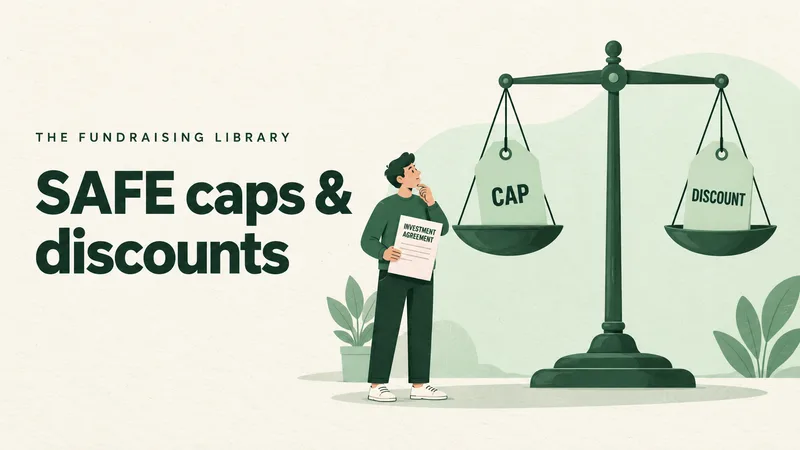 Investment terms · Guide 13
SAFE valuation caps and discounts: how conversion works
Follow a single SAFE from its signed terms through conversion and new money. Includes explicit assumptions and a scenario worksheet.
Read the guide →
 Investment terms · Guide 14
Liquidation preferences: who gets paid when a startup exits?
Compare preference, participation and conversion across fictional exits. Includes an interactive waterfall and a review worksheet.
Read the guide →
 Valuation · Guide 15
How to estimate the valuation of a pre-revenue startup
Build a supported valuation range and test the assumptions. Includes evidence checks and an illustrative sensitivity worksheet.
Read the guide →
 Employee equity · Guide 16
Startup employee vesting: cliffs, schedules and leavers
Separate vesting, exercise and ownership. Work through a fictional schedule and prepare the questions to review before signing.
Read the guide →
 Original research · Guide 17
What investors look for in founders: lessons from our VC research
Turn selected VC interview observations into evidence you can prepare. Includes research limitations and a founder evidence worksheet.
Read the guide →
 Fundraising preparation · Guide 18
How to prepare for investor due diligence
Assign owners, reconcile records and resolve gaps before sharing. Includes a worked preparation process and a diligence response register.
Read the guide →
One useful decision at a time.
Start with investor fit, build a clear monthly update and model founder dilution. Then organize outreach, prepare your seed deck and assemble the supporting documents and review your cash runway and financial model.
For interviews and founder stories, read Founders' Capital and Founders' Psyche.